Winter ice and snow safety around your property
By Diego Fischer · Updated 2026-06-19
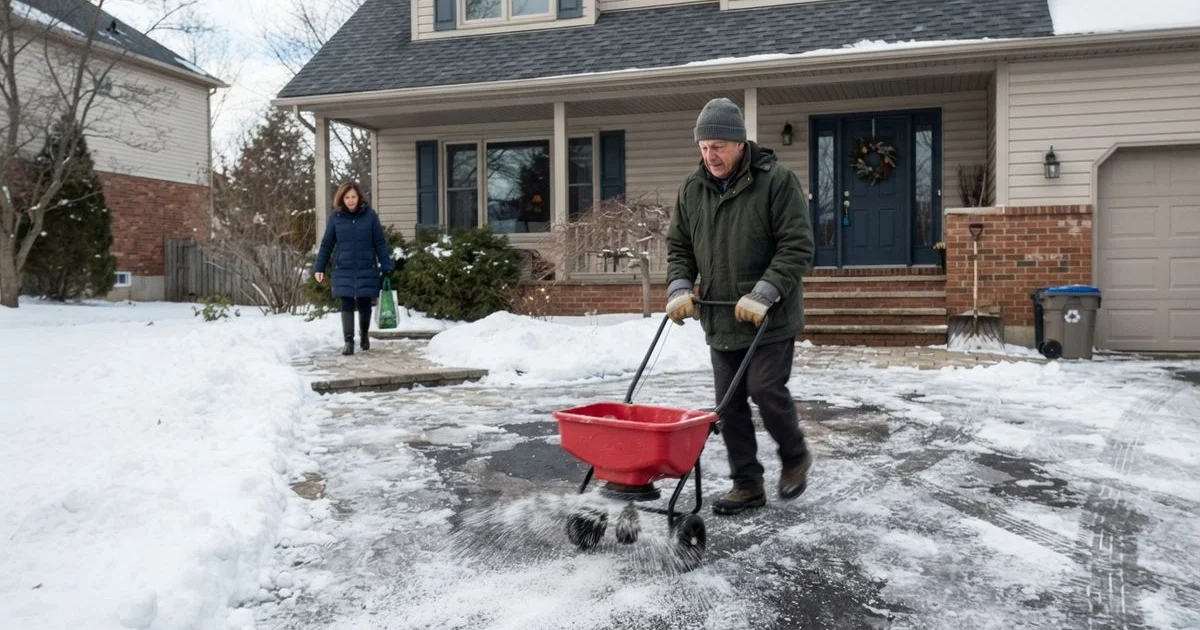
Ontario winters bring a steady mix of snow, freezing rain, and thaw-refreeze cycles that turn ordinary driveways and walkways into a real fall hazard if they’re not managed. This is general safety information, not a substitute for judgment about your specific property and physical ability to safely do this work yourself.
Driveways and walkways
Clear snow before it gets compacted by foot or car traffic, since packed snow turns to ice much faster than loose snow. Salt or ice melt works best applied before ice fully bonds to the surface, ideally ahead of a freezing rain forecast rather than after the fact. Keep a supply on hand early in the season rather than realizing you’re out during the first storm.
Clearing snow promptly after it falls, rather than waiting for it to stop entirely during a long storm, also makes the job easier overall, since fresh snow is lighter and hasn’t had time to compact under its own weight.
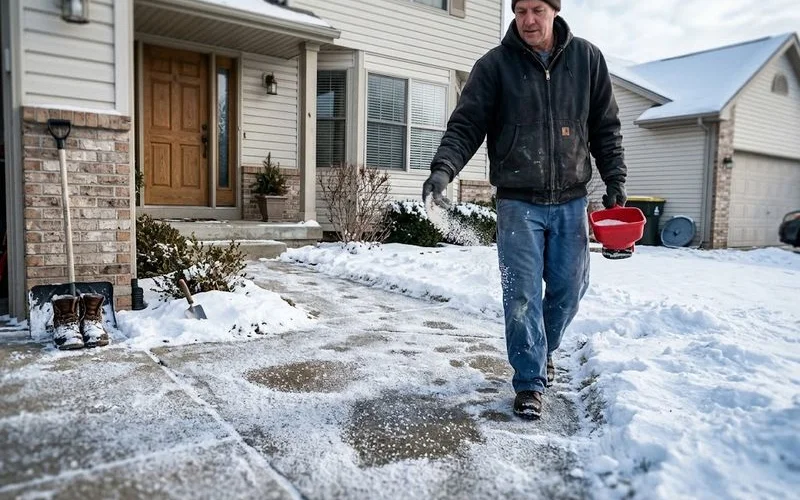
Choosing an ice melt product
Not every ice melt product is the same. Some are formulated to be gentler on concrete and safer around pets, while others are cheaper but harsher on surfaces and landscaping. Check the label rather than grabbing whatever bag is on sale, especially if you have pets that walk on the treated surface or concrete that’s already showing wear.
| Hazard area | Risk | What to do |
|---|---|---|
| Driveway and walkway | Slips from ice, packed snow | Shovel promptly, salt before ice bonds |
| Steps and porches | Falls, often in low-light conditions | Extra attention here, consider adding traction strips |
| Roofline and eaves | Ice dams, water intrusion under shingles | Have significant buildup professionally assessed |
| Overhangs near walkways | Falling ice or snow | Watch for icicles and clear the path below |
Steps and porches
Steps deserve extra attention since a fall there is often more severe than a fall on a flat driveway. Good lighting and, if steps are consistently icy, adding traction strips or a handrail can meaningfully cut risk, particularly for anyone in the household with mobility concerns.
Freeze-thaw cycles, common through an Ontario winter as temperatures swing above and below zero, are what make steps and walkways especially unpredictable. A surface that looks dry and safe in the afternoon sun can refreeze into black ice overnight, catching people off guard exactly because it isn’t visibly obvious the way fresh snow is. Checking known trouble spots in the early morning, before the day warms up, is a habit worth building through the coldest stretch of winter.
Rooflines and ice dams
Heavy, prolonged snow accumulation on a roof, especially combined with freeze-thaw cycles, can lead to ice dams that force meltwater back under shingles and into the house. This is a case where a professional assessment is genuinely worth it rather than a DIY attempt with a roof rake on a ladder in icy conditions. If you notice icicles forming heavily along an eave or water staining appearing on an interior ceiling in winter, that’s worth a call sooner rather than later.
Good attic insulation and ventilation actually play a bigger role in preventing ice dams than most homeowners realize, since a warm attic melts snow from underneath even in cold weather, and that meltwater refreezes at the colder eave to form the dam. If ice dams are a recurring problem on your home, it’s worth asking whether the fix is really about the roof itself or about attic conditions underneath it.
When to bring in a professional
If shovelling and salting your own property isn’t realistic, whether due to the size of the area, mobility, or time, a seasonal snow removal contract is a reasonable and common solution rather than something to be talked out of. For steep roof sections or heavy ice dam concerns, a professional with the right equipment is safer than attempting it yourself.
To find a snow removal provider serving your area, see the snow removal category, scored using our methodology, or browse the full Ontario landscaper directory for other winter services.
FAQ
- What's the best time to salt a driveway or walkway?
- Before ice fully forms, if possible; salting ahead of a freezing rain event or right after shovelling is more effective than trying to melt ice that's already bonded to the surface.
- Is it dangerous to let snow build up on a roof?
- A heavy accumulation can add significant weight and, combined with freeze-thaw cycles, contribute to ice dams that force water under shingles. Large accumulations, especially on flat or low-slope roofs, are worth having assessed rather than ignored.
- Are all ice melt products safe for concrete, pets and plants?
- No, they vary. Some products are harsher on concrete surfaces or landscaping than others, and some are safer around pet paws than others. Check the product label rather than assuming any bag of ice melt is interchangeable.
- When should I call a professional instead of handling ice and snow myself?
- If ice or snow buildup is somewhere hard to safely reach (a roofline, a steep section), or if you're not physically able to shovel and salt regularly, a professional snow removal or roof-clearing service is the safer call. This is general information, not a substitute for assessing your specific situation.
Related on this site
- Browse snow removal providers
- Best snow removal in Ontario →
- What snow removal costs in Ontario: contracts vs pay-per-visit
- Who is liable for snow and ice on your property in Ontario
- Free and low-cost snow removal help for seniors in Ontario
- Helping an aging parent with yard work and snow removal
- All guides →